Quick facts
| Parent species | Echinopsis lageniformis (Kew treatment; grower's name "bridgesii") |
|---|---|
| Status | Horticultural growth-form label ("monstrose" = irregular, fasciated-style growth), not a taxonomic rank and not a single registered cultivar |
| Named selections | Seller labels such as TBM A, TBM B, "long-form" or "short-form" are informal grower names, not ICNCP-registered cultivars. |
| Conservation status | As for the underlying species, Echinopsis lageniformis: IUCN Least Concern. CITES Appendix II, as for the whole family Cactaceae. |
Taxonomy and names
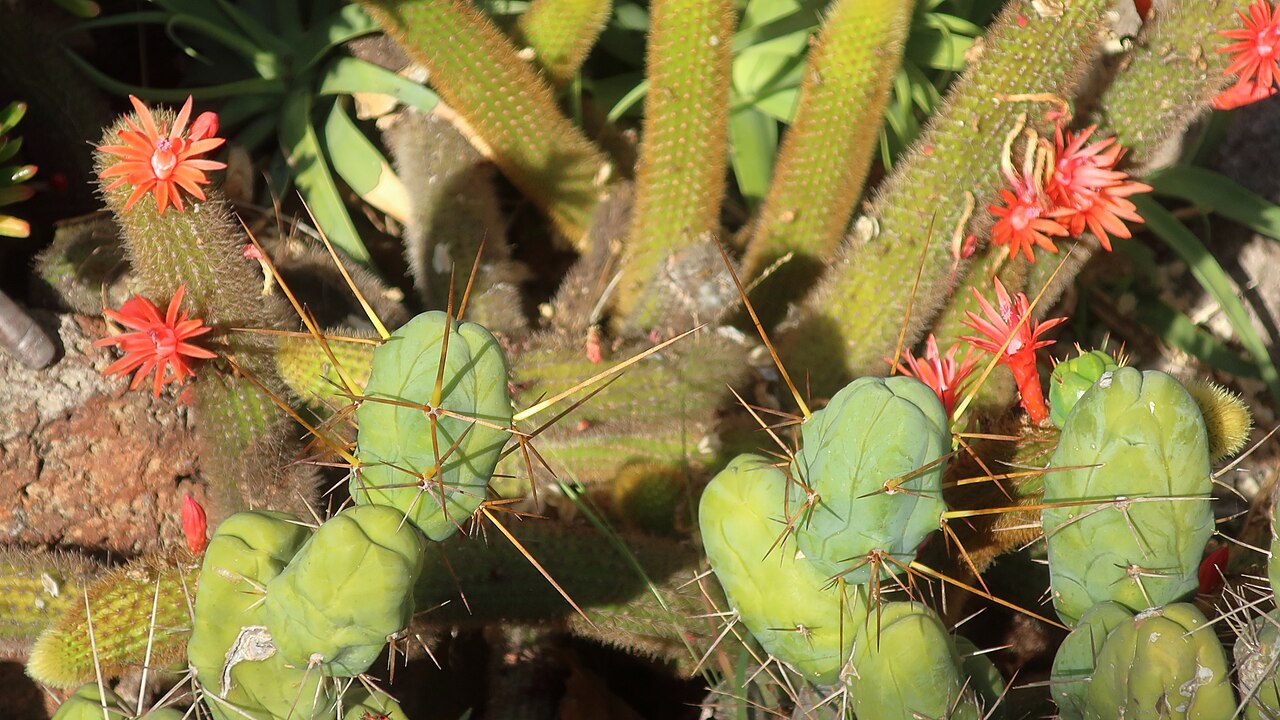
"Monstrose" describes an irregular growth habit, not a taxonomic rank. The underlying species is Echinopsis lageniformis (grower's name "bridgesii"), placed there by Kew's current treatment; that botanical placement says nothing about the origin of any individual monstrose plant in cultivation. A seller's TBM A, TBM B, long-form or short-form label needs its own source record — the wording alone does not authenticate a clone. Retain the original label and whether the plant was received as a cutting or a seedling.
Two clones are recognized in cultivation under these labels.
| Clone | Description |
|---|---|
| Clone A (long form, "Type A") | The less common of the two; more elongated segments. |
| Clone B (short form, "Type B") | The more common form in cultivation; compact, rounded-node growth. |
Named monstrose selections documented in the collector record include 'Alko', 'Ben', 'Crown of Thorns', 'Jiimz Twin Spine' and 'Nimbin'. For the form's history: Curt Backeberg claimed in Die Cactaceae to be the source for at least one of the two clones. Separately, hobbyist lineage records credit Ed and Betty Gay with introducing the monstrose to cultivation in the 1960s — that attribution is community lore rather than an independently documented source and is noted here as such.
Kew · Echinopsis lageniformis ↗ · San Pedro Source · Long form vs. short form TBM ↗ · Trichocereus.net · TBM Type B ↗
Cultivation
Monstrose bridgesii generally follows the same cultivation profile as the species; see the bridgesii page for detailed ranges. Compare new growth against the plant's own established pattern: sudden proliferation, declining vigor or spreading lesions warrants isolation and assessment, while unusual shape alone is not evidence of a virus. See the cactus health guide.
Conservation and legal status
Not separately assessed by the IUCN Red List under this growth-form name; the species it belongs to, Echinopsis lageniformis, is assessed Least Concern. The whole family Cactaceae, including this plant, is listed on CITES Appendix II.
References
Kew POWO · Echinopsis lageniformis ↗ · San Pedro Source · Long form vs. short form TBM ↗ · Trichocereus.net · TBM Type B ↗