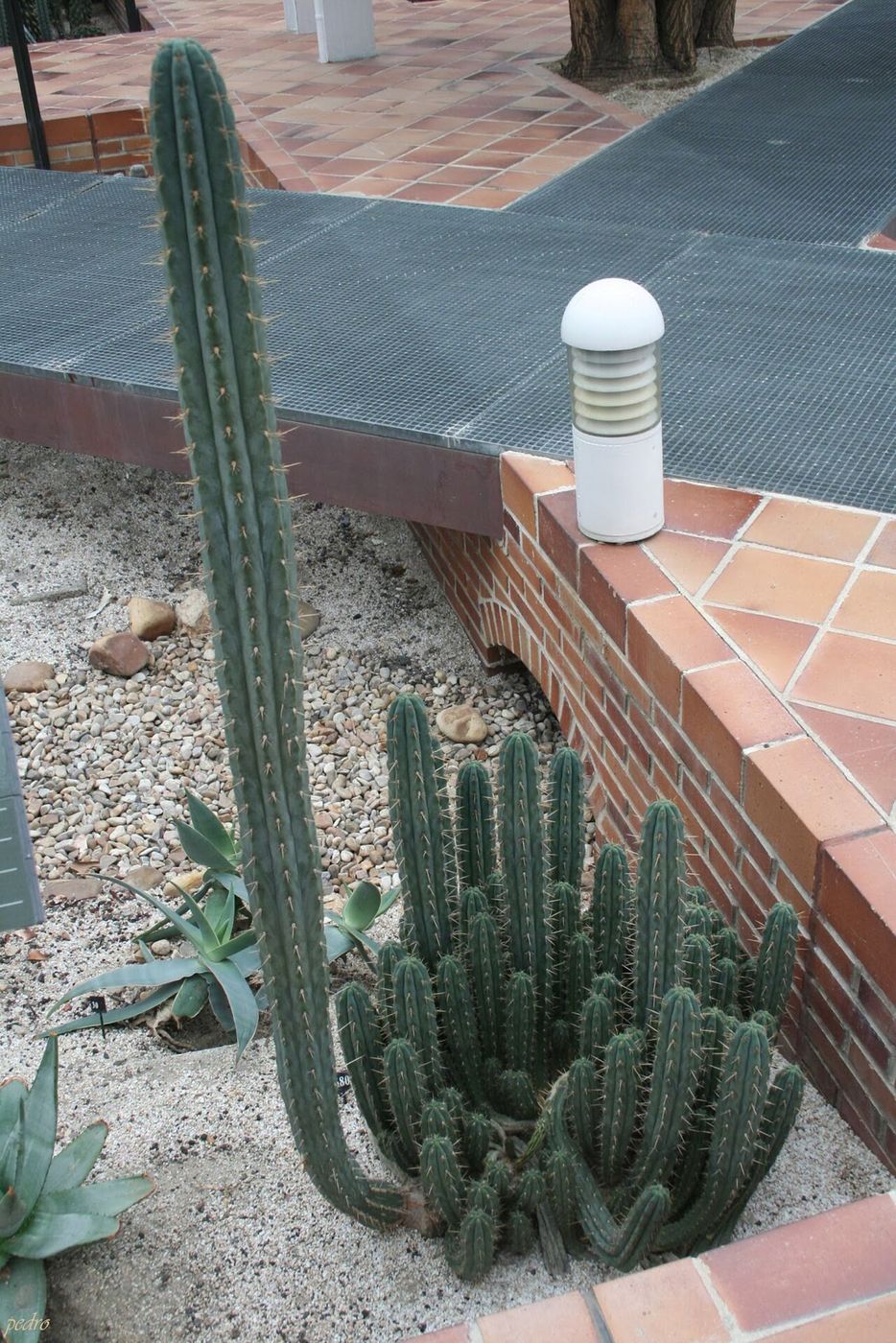
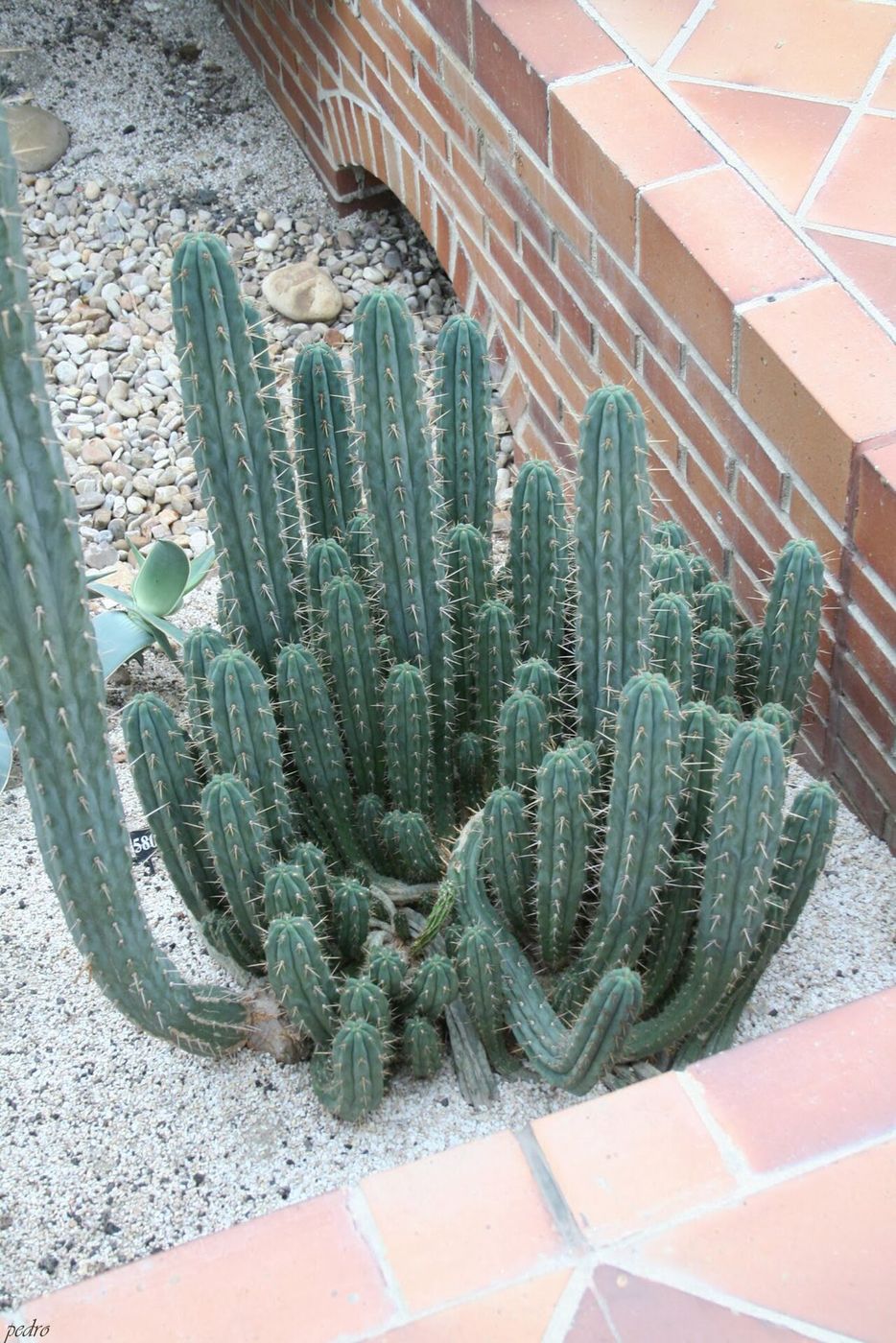
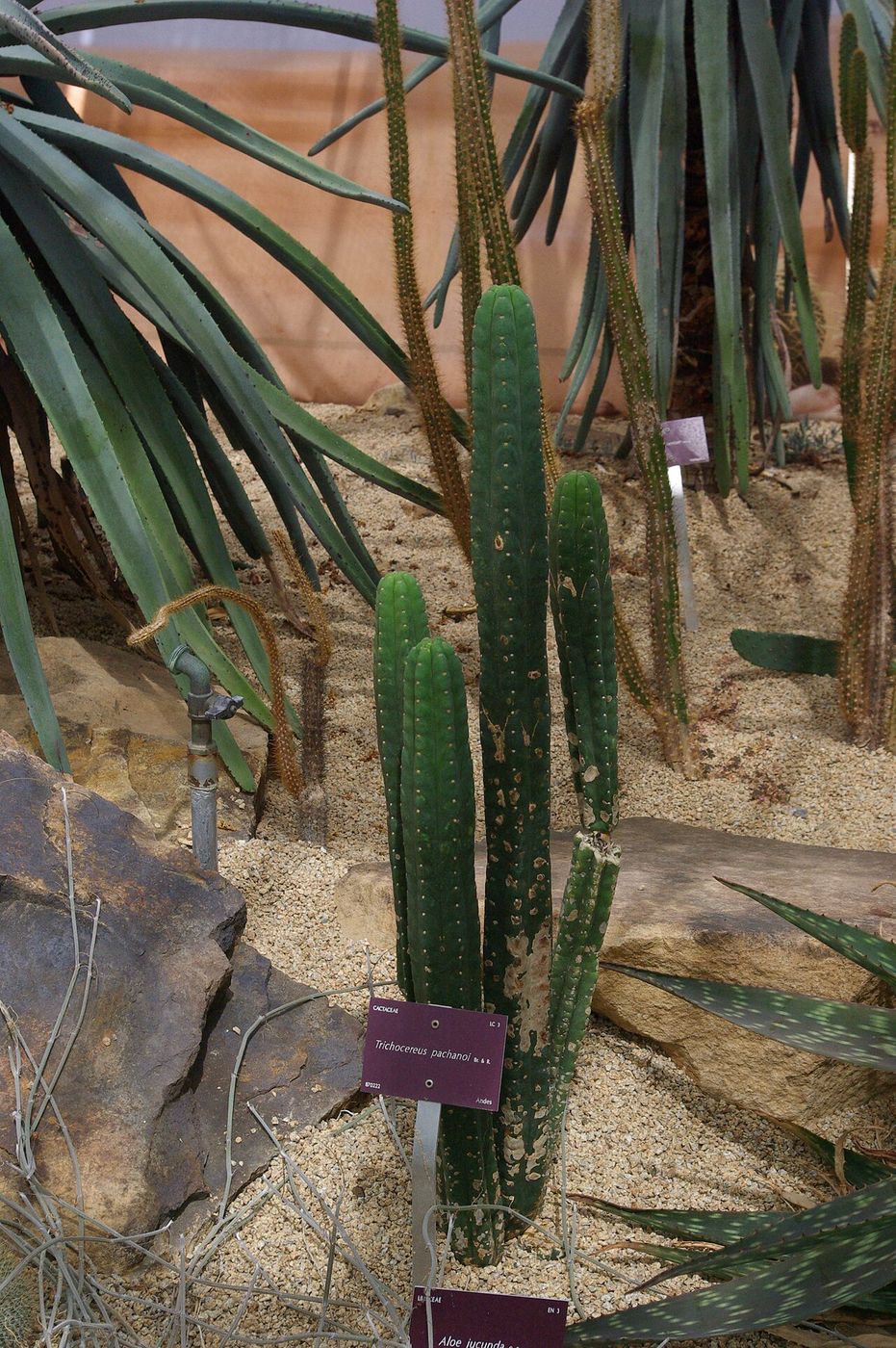
Quick facts
| Parent species | Echinopsis pachanoi (Kew treatment; grower's name "pachanoi") |
|---|---|
| Status | Informal horticultural clone nicknames; not validly published botanical names |
| "PC" | Short for "Predominant" (or "Predominate") "Cultivar" — a term popularized by cactus researcher Keeper Trout (Trout's Notes) for the single most widely propagated clone sold as Trichocereus/Echinopsis pachanoi |
| "Pachanot" | Used for what some growers call "Backeberg's clone." Per Trout's research, the plant now in circulation under this name may not be the same individual Backeberg brought into German horticulture in 1931, and no wild origin has been documented for it. |
| Conservation status | As for the parent species, Echinopsis pachanoi: IUCN Least Concern. CITES Appendix II, as for the whole family Cactaceae. |
Taxonomy and names
"PC" and "pachanot" are grower nicknames, not botanical names, and they name individual clones rather than a species — keep that distinct from the species-level synonymy discussed on the pachanoi page. Record PC, predominant cultivar or "pachanot" exactly as supplied, along with where and when the plant was obtained; the name by itself does not prove that every similarly labelled plant belongs to a single authenticated clone.
"PC" stands for "Predominant" (or "Predominate") Cultivar, a term popularized by Keeper Trout as shorthand for "the predominant cultivar of Trichocereus pachanoi"; the clone is propagated entirely vegetatively. It became extremely common in California parks, schools and gardens for its hardiness and ease of propagation, and nurseries mass-produced cuttings, making it the dominant face of San Pedro in US horticulture. Trout later coined "pachanot" (a play on "pachanoi-not") as a more distinct label, partly because "PC" read as culture-centric — this clone is not necessarily predominant outside the US — and because the plant has not been documented from the wild and consistently differs from true pachanoi. Trout further argues the pachanot is not the same plant Backeberg recognized as pachanoi at Huancabamba and claimed to introduce into German horticulture in 1931; no evidence has yet confirmed the pachanot itself in the wild.
Two origin hypotheses have been proposed for the pachanot. One points to material that Robert Field's father received from Harry Blossfeld in 1935; Blossfeld sold twelve shares in his collecting expedition to finance it, and the resulting large volume of similar-looking cactus distributed to supporters could explain the clone's present abundance in the US, Europe and Australia — DNA analysis has been proposed to test this. An alternative hypothesis is that a collector such as Paul C. Hutchison or Harry Johnson Jr. collected or produced a naturally occurring pachanoi × bridgesii hybrid from Bolivia, whose wild parent population may have been removed during a 1970s Bolivian government program that cleared certain columnar cacti from urban areas.
Competing origin stories for "pachanot" need independently traceable evidence before they establish a lineage; this page does not infer parentage from appearance, a market label or repetition of the same story. A dated cutting chain is still useful even when the earliest origin is unknown — state the last documented link and leave earlier steps open. See the lineage guide for how to build that kind of record.
Trout's Notes · Pachanoi / pachanot (grower history, not a taxonomic authority) ↗ · Trout's Notes · Backeberg's clone ↗ · Trichocereus.net · History of the PC clone ↗ · San Pedro Source · Understanding PC Trichocereus ↗
Cultivation
PC and pachanot generally follow the same cultivation profile as the species; see the pachanoi page for detailed ranges.
Conservation and legal status
Not separately assessed by the IUCN Red List under either nickname; the species they belong to, Echinopsis pachanoi, is assessed Least Concern. The whole family Cactaceae, including this plant, is listed on CITES Appendix II.
References
Trout's Notes · Pachanoi / pachanot ↗ · Trout's Notes · Backeberg's clone ↗ · Trichocereus.net · History of the PC clone ↗ · San Pedro Source · Understanding PC Trichocereus ↗