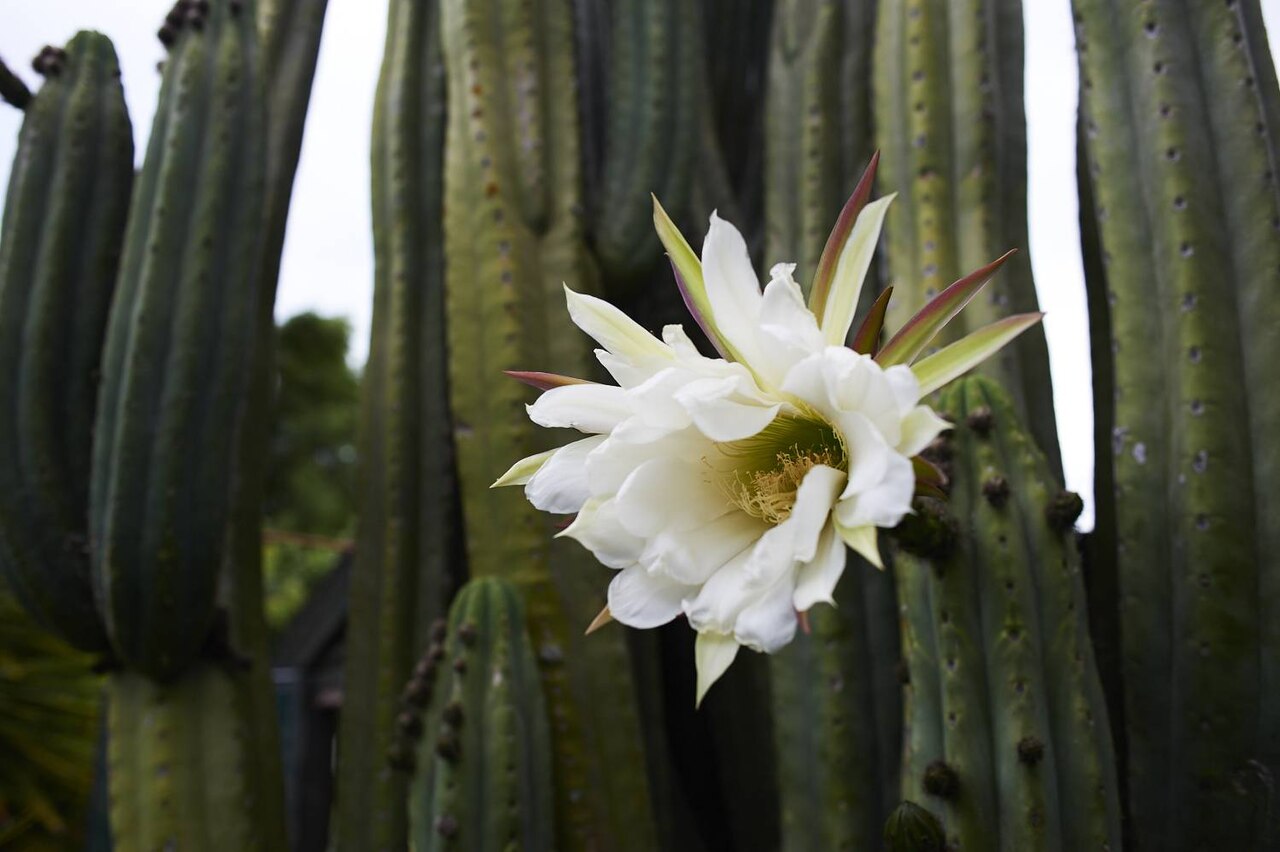
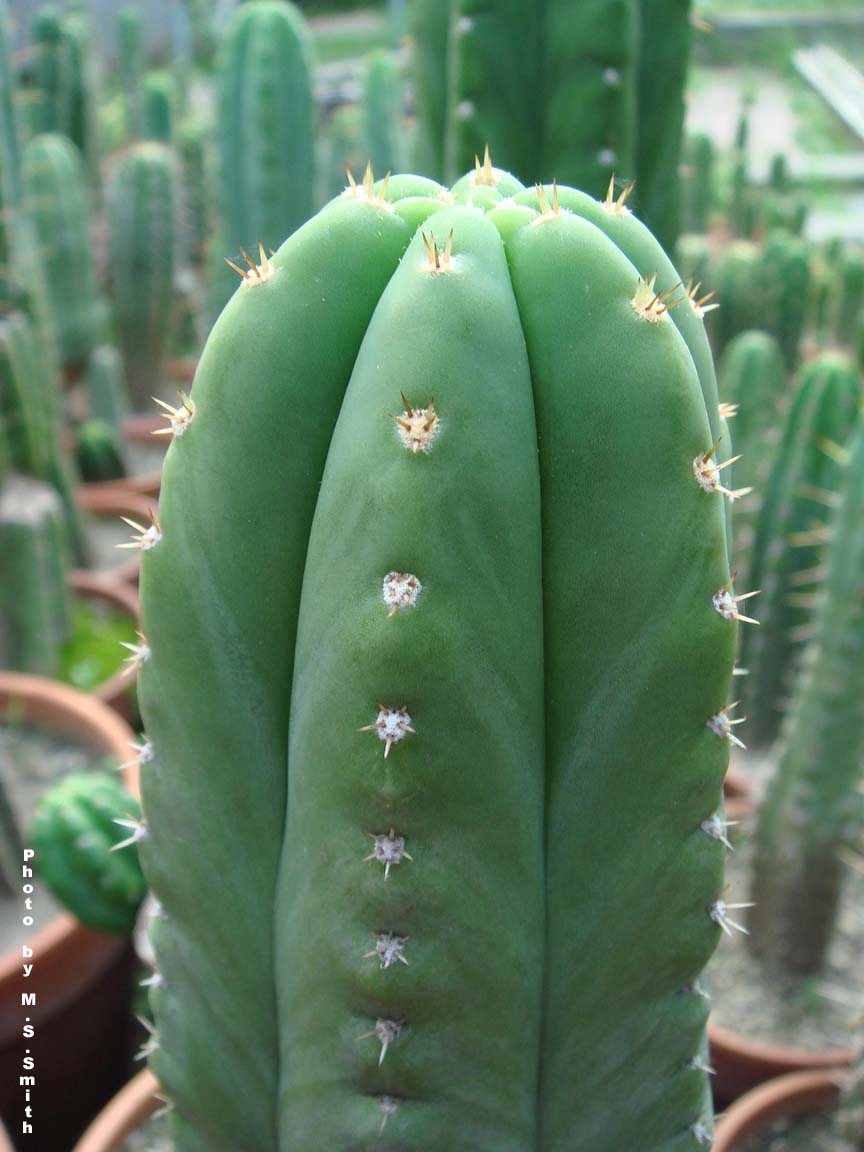
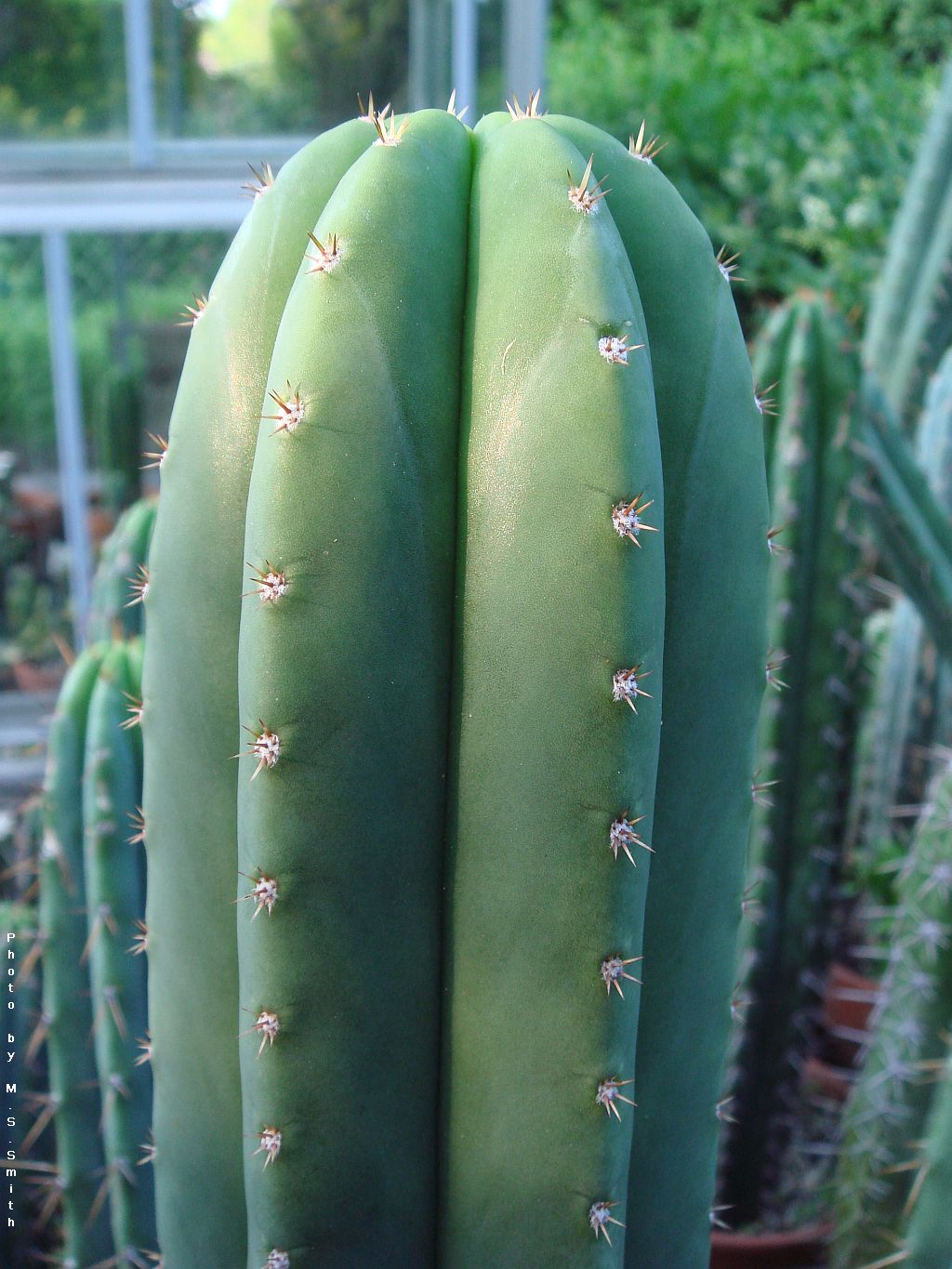
Quick facts
| Parent species | Echinopsis lageniformis (Kew treatment; grower's name "bridgesii") |
|---|---|
| Status | Horticultural name for one field collection, not a separate botanical species under the current Kew treatment |
| Synonym record (Kew) | Trichocereus scopulicola F.Ritter, Cactus (Paris) 87: 14 (1966), heterotypic synonym of Echinopsis lageniformis; also combined as Echinopsis scopulicola (F.Ritter) Mottram, Cactaceae Consensus Init. 2: 9 (1997) |
| Origin | Collected by Friedrich Ritter near Tapecua, Tarija, Bolivia, in 1959 (field number FR991). Current wild status is unknown, possibly extinct — all cultivated stock traces to that one collection. |
| Conservation status | Not separately evaluated by IUCN; covered under Echinopsis lageniformis (assessed Least Concern). CITES Appendix II, as for the whole family Cactaceae. |
Taxonomy and names
Kew treats scopulicola as a heterotypic synonym of Echinopsis lageniformis — the same accepted species as bridgesii. Growers keep "scopulicola" as a separate horticultural identity because its entire cultivated population derives from Ritter's single 1959 field collection (FR991), whose wild status is now uncertain. That is a legitimate reason to keep a dedicated page even though it is not a separate botanical species; keep the horticultural name visible when recording a plant, since synonymy at the species level does not merge individual cultivated selections.
A field or seed-source code such as FR991 identifies a collection event, not a single clone: multiple seedlings grown from that collection can be genetically different from one another while sharing the same reference number. Record the collector, catalogue and acquisition history rather than treating a code alone as a verified clone pedigree. Friedrich Ritter discovered the plant during a 1959 expedition to Bolivia and distributed FR991 seed widely through his own "Winter" seed lists, which is how it became established in cultivation worldwide despite being rare in the wild; one documented cultivated line (held by NMCR) was grown from FR991 seed acquired from Rivière De Caralt.
Named selections
Grower-named selections and hybrids derived from this clone include the following.
| Clone or cultivar | Originator or source | Parentage / origin | Notes |
|---|---|---|---|
| 'NZ Marbled Towers' | Grown and selected by Gary Wilson | Selection from cultivated T. scopulicola | Variegated (marbled) form. |
| 'Super Pedro' | Cactus Country (catalogue reference LHB2444) | Scopulicola-derived hybrid | Scopulicola is used as a hybridizing parent; this is a documented named result. |
Kew · Echinopsis lageniformis ↗ · Trout's Notes · scopulicola background (grower history, not a taxonomic authority) ↗ · Trichocereus.net · Trichocereus scopulicola ↗ · Trichopedia · scopulicola ↗
Cultivation
As a horticultural form of Echinopsis lageniformis, scopulicola generally follows the same cultivation profile described on the bridgesii page. Let new roots establish and acclimate plants gradually to available light; see the growing guide and document conditions for the individual plant.
Conservation and legal status
Not separately assessed by the IUCN Red List under the name scopulicola; the species it belongs to, Echinopsis lageniformis, is assessed Least Concern. The whole family Cactaceae, including this plant, is listed on CITES Appendix II.
References
Kew POWO · Echinopsis lageniformis ↗ · Trout's Notes · scopulicola (grower history) ↗ · Trichocereus.net · Trichocereus scopulicola ↗ · Trichopedia · scopulicola ↗