Quick facts
| Family | Cactaceae |
|---|---|
| Subfamily | Cactoideae |
| Tribe | Cacteae (subtribe Cactinae) |
| Genus | Lophophora J.M.Coult. |
| Accepted name | Lophophora diffusa (Croizat) Bravo (1967) |
| Synonyms | L. koehresii, L. viridescens (incl. subsp. viridescens), subsp. kubesae, var. swobodaiana — see Taxonomy and names |
| Common names | No widely documented common name |
| Native range | Mexico: Querétaro to Hidalgo |
| Conservation status | IUCN Vulnerable (VU, 2017 amended assessment); CITES Appendix II |
Description
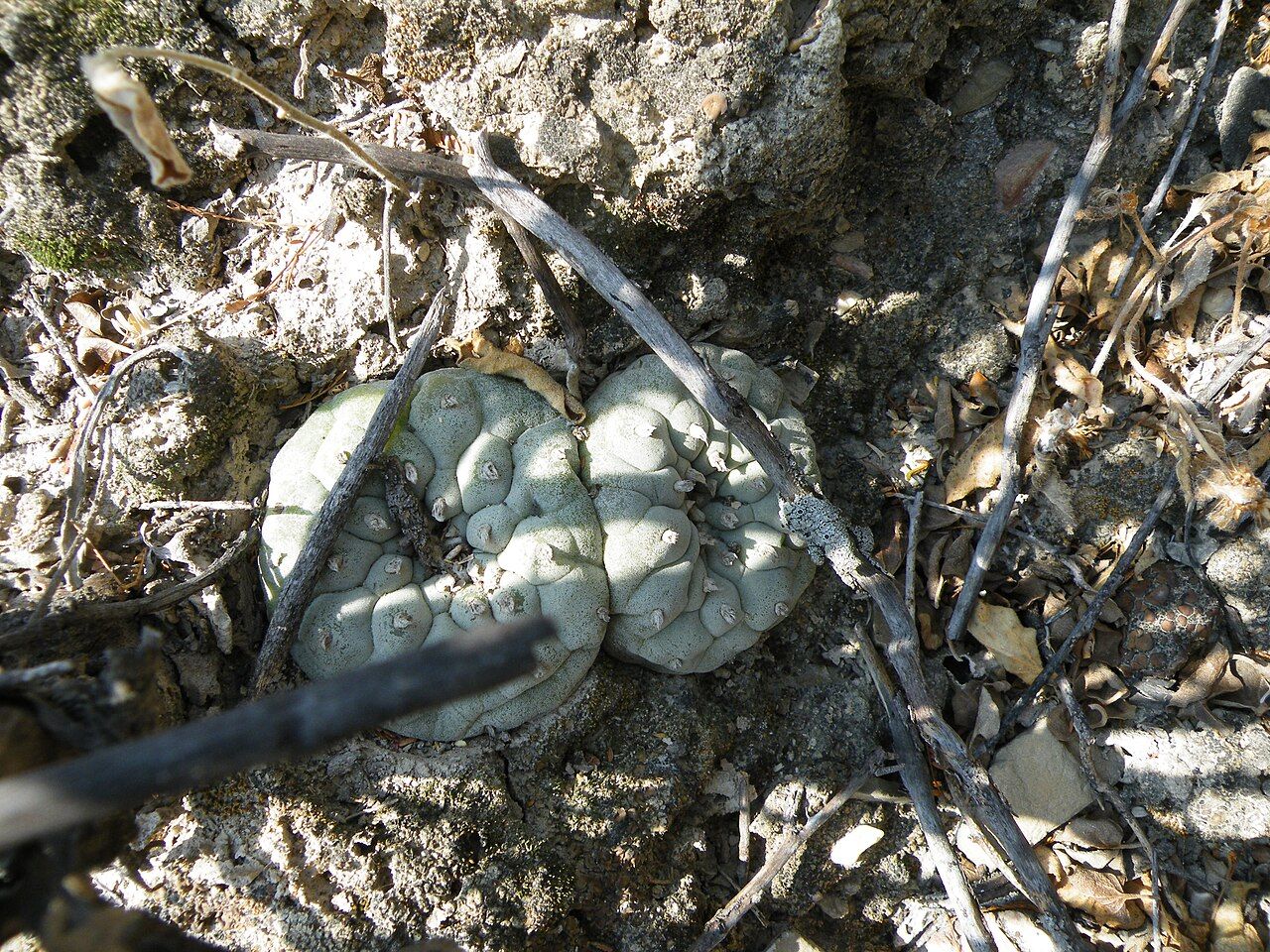
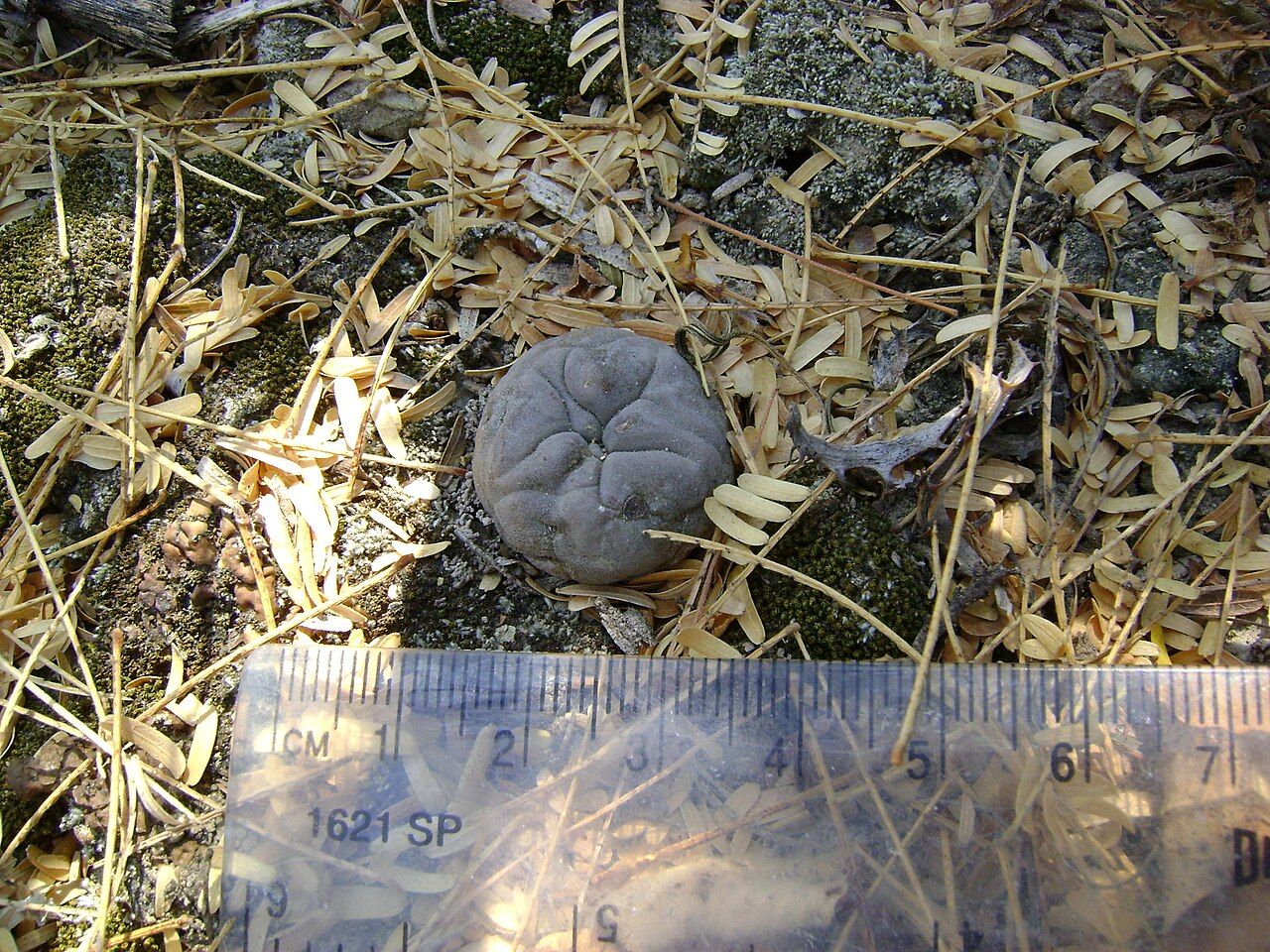
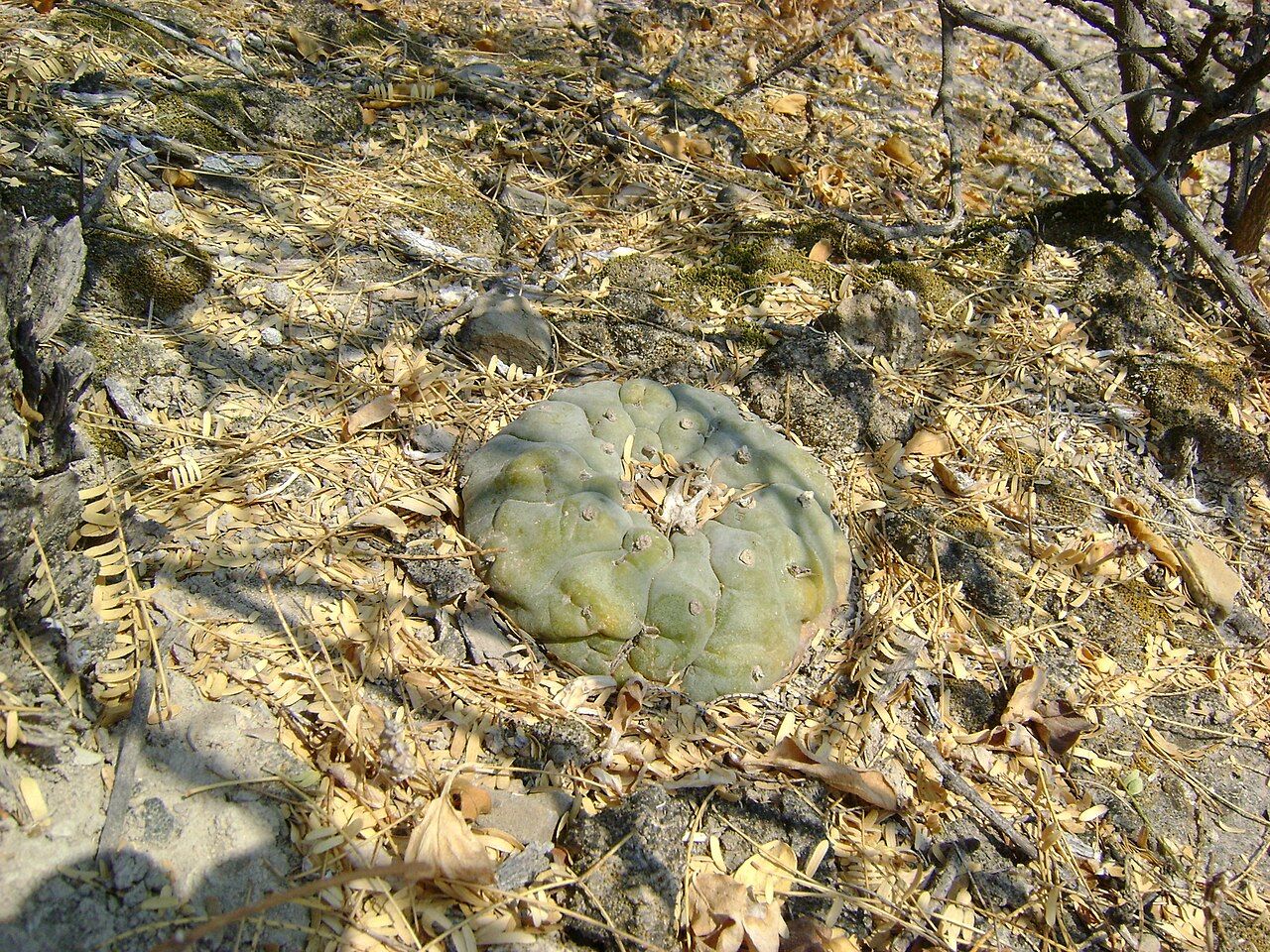
The stem is yellow-green, usually flat-topped with a recessed apex, and often sits nearly flush with the soil. Ribs are typically poorly defined, tending toward broad, flat tubercles rather than distinct ridges, with small areoles carrying tufts of wool.
Flowers
Diurnal, white to pale pink or yellowish-white, smaller than in L. williamsii at roughly 1.3–2.2 cm across.
Root
A broad, shallow, tuber-like root.
Distribution and habitat
Endemic to a small area of Querétaro, Mexico, between Vizarrón, Bucareli and Tolimán, with populations also reported into neighboring Hidalgo. It grows on limestone soils on slopes and in riverbeds at roughly 1,000–2,000 m elevation, in semi-desert habitat, typically beneath nurse shrubs such as Larrea tridentata and Senegalia sororia.
Similar species
The clearest within-genus confusion is a pale or pale-flowered L. williamsii, which usually keeps better-defined ribs and a darker pink flower — see the genus comparison table. L. fricii generally runs more bluish grey-green with larger flowers. Material sold or labelled "koehresii" sits inside L. diffusa in the Kew treatment; it is a separate wild population from the Río Verde–Tula basin that Lophophora specialists treat as its own taxon (see the koehresii profile). Outside the genus, Ariocarpus and Astrophytum asterias are the usual confusions for the whole genus — see the williamsii note for that comparison.
Cultivation
Grown much like the rest of the genus. See the soil-mix guide and the seasonal-care calendar for the reasoning behind each line below.
| Light | Bright light with some relief from the harshest midday sun; more direct sun once acclimated in a mineral mix |
|---|---|
| Soil | A fast-draining, mostly mineral mix — see the soil-mix guide for a tested recipe and simpler starting points |
| Watering | Water and let the mix dry fully through the growing season; keep dry and frost-free over winter — see the seasonal-care calendar |
| Temperature | Protect from hard frost; the shallow tuberous root and crown are vulnerable to cold, wet conditions |
| Propagation | From seed — see the seed-growing guide; grafting onto faster-growing stock speeds early growth without changing identity — see the grafting guide |
Cultivars and forms
One horticultural name is widely used by growers for a population of this species: L. diffusa var. koehresii Říha (1996), commonly sold simply as "koehresii." Plants of the World Online treats the name as a synonym of L. diffusa at species rank — see Taxonomy and names below — but Continental European systematists have continued to recognize it, while Anglo-American cactus taxonomists have not yet accepted it as a distinct species, so sources disagree on its standing. The town of Tula, in the Mexican state of Tamaulipas, holds the northernmost known population bearing this name. Seed-coat (testa) sculpture has been reported to differ measurably among L. williamsii, L. diffusa, L. diffusa var. koehresii and L. fricii, which is the microscopic evidence growers and some taxonomists point to for keeping "koehresii" distinct in practice even where its formal rank is unsettled.
Kew · Lophophora diffusa ↗ · Terry, M., "Stalking the Wild Lophophora," Parts 1–2, Cactus and Succulent Journal 80, 2008 · Hansen, A., "Lophophora fricii and Lophophora williamsii var. decipiens," 2000.
Taxonomy and names
Kew accepts Lophophora diffusa (Croizat) Bravo, published in 1967. Its synonymy includes L. koehresii (Říha) Bohata, Myšák & Šnicer (basionym L. diffusa var. koehresii Říha, 1996), L. viridescens Halda and subsp. viridescens Halda (1997), subsp. kubesae Halda, Kupčák & Malina (2002) and var. swobodaiana Halda, Kupčák & Malina (2002). None of these is a currently recognized subspecies or variety; Kew treats all of them as synonyms of L. diffusa at species rank. Retain any "koehresii" or other population label exactly as received, together with the supplier record — a taxonomic synonym does not erase a documented source distinction.
Conservation and legal status
IUCN lists L. diffusa as Vulnerable (VU) in a 2017 amended assessment: estimated extent of occurrence is roughly 300 km², across fewer than 10 locations, with fewer than 3,000 mature individuals and an estimated decline of 30% or more over 20 years. Principal threats are illegal collection and habitat disturbance. The species is also covered by the family-wide CITES Appendix II listing, which regulates international trade in wild-sourced specimens. Check current local law before acquiring or moving plant material; see the sourcing guide.
References
- Kew POWO · Lophophora diffusa ↗
- Wikipedia · Lophophora diffusa ↗
- Wikipedia · Lophophora (genus overview) ↗
- NC State Extension · Lophophora (genus cultivation notes) ↗
- Terry, M., "Stalking the Wild Lophophora," Parts 1–2, Cactus and Succulent Journal 80, 2008.
- Hansen, A., "Lophophora fricii and Lophophora williamsii var. decipiens," 2000.