Quick facts
| Family | Cactaceae |
|---|---|
| Subfamily | Cactoideae |
| Tribe | Cacteae (subtribe Cactinae) |
| Genus | Lophophora J.M.Coult. |
| Accepted name | Lophophora fricii Haberm. (1975) |
| Synonyms | 3 recorded by Kew, combinations published under L. diffusa and L. williamsii (Halda 1997; Grym 1997) — see Taxonomy and names |
| Common names | No widely documented common name |
| Native range | Mexico: Coahuila |
| Conservation status | IUCN Data Deficient (DD); CITES Appendix II |
Description
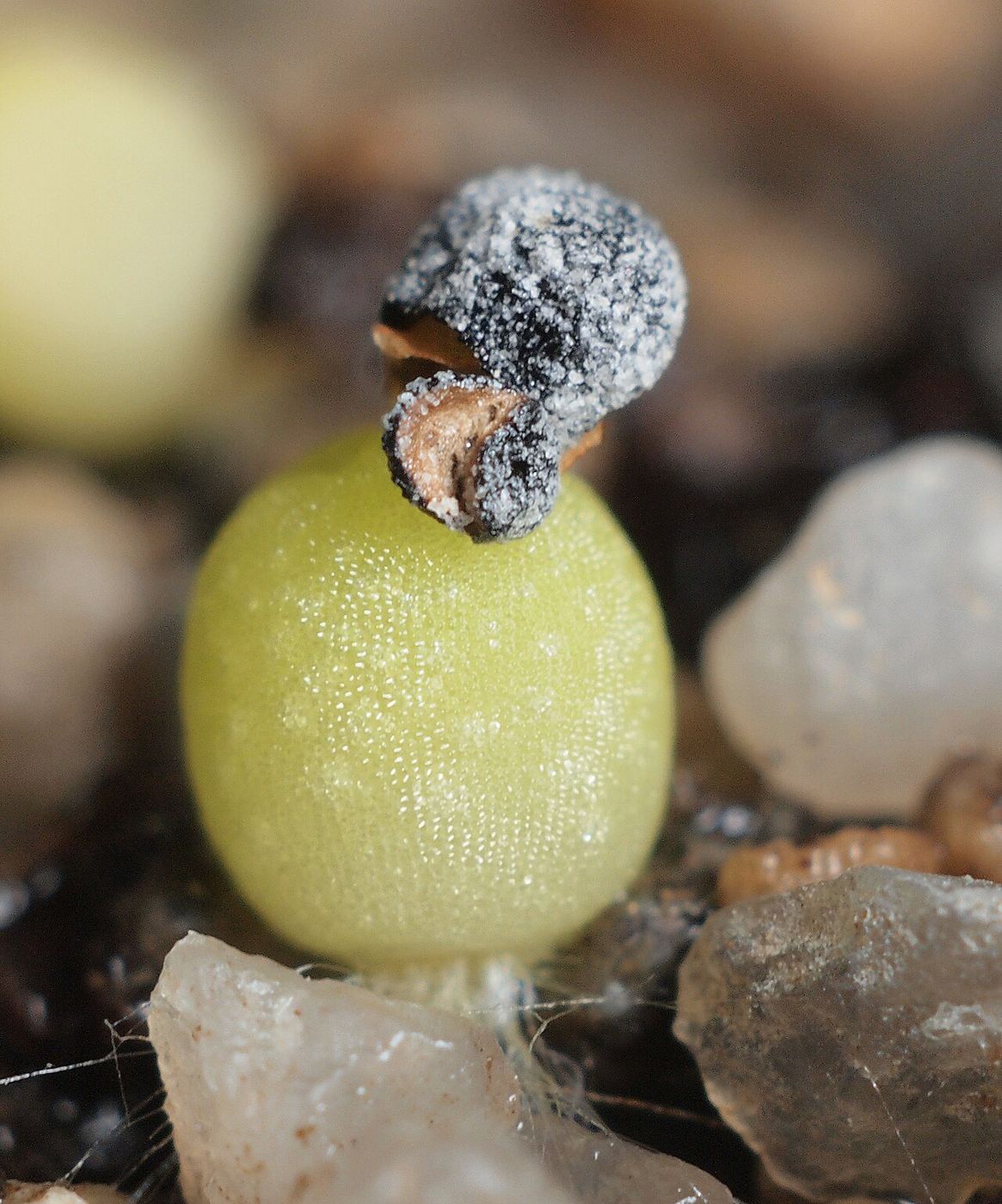
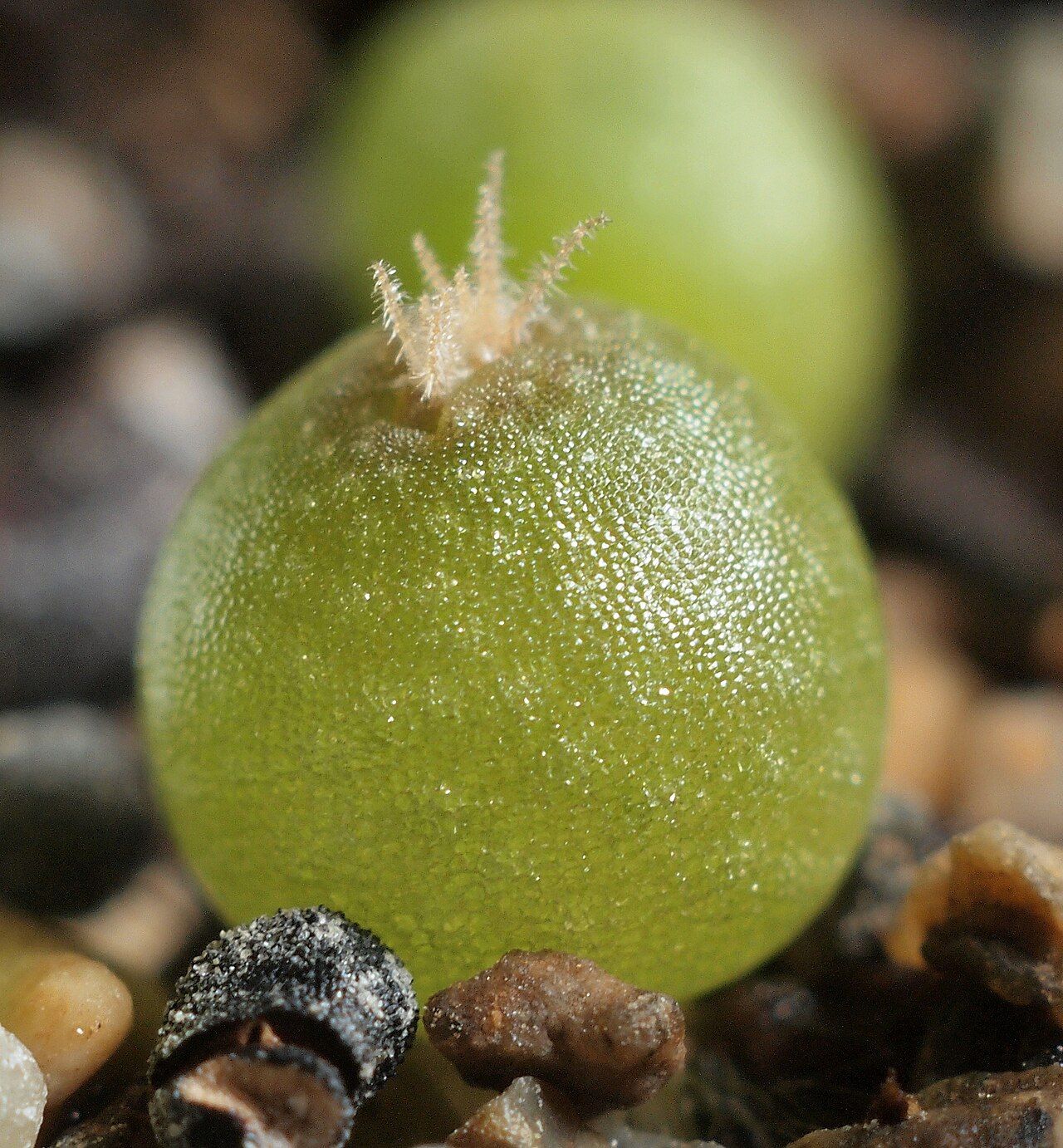
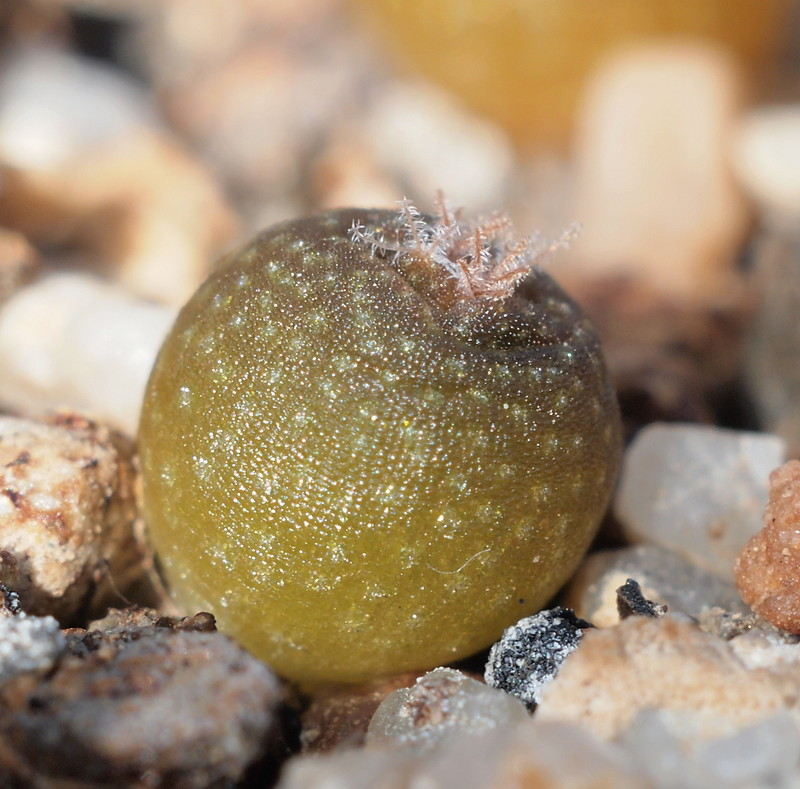
The stem is pale grey-green to yellow-green, usually lacking well-defined ribs and furrows — the surface tends toward broad, flat podaria rather than sharp ridges, with ribs counted at 5 to 13 where they can be made out at all. A large taproot sits below a crown that is often nearly geophytic, sitting at or just below soil level. Seed coat texture and hilum shape are also cited as distinguishing characters in formal treatments.
Flowers
Notably large for the genus, commonly pale to dark pink, reported to exceed 4 cm across; flower colour varies noticeably between individuals.
Distribution and habitat
Native range is Coahuila, Mexico. The species is listed as Data Deficient by IUCN, so detailed habitat and population data beyond the known range are not available.
Similar species
Compared with L. williamsii, this species tends to run paler and more yellow-grey with less-defined ribs and larger flowers; compared with L. diffusa, it is usually more bluish rather than clearly yellow-green — see the genus comparison table. Growers report it is hard to find two similar plants at one location, particularly in flower colour, which makes single-photograph identification unreliable. Outside the genus, Ariocarpus and Astrophytum asterias are the usual confusions — see the williamsii note for that comparison.
Cultivation
Conservation data for this species remain limited, so cultivation notes follow general genus guidance rather than species-tested advice. See the soil-mix guide and the seasonal-care calendar for the reasoning behind each line below.
| Light | Bright light with some relief from the harshest midday sun; more direct sun once acclimated in a mineral mix |
|---|---|
| Soil | A fast-draining, mostly mineral mix — see the soil-mix guide for a tested recipe and simpler starting points |
| Watering | Water and let the mix dry fully through the growing season; keep dry and frost-free over winter — see the seasonal-care calendar |
| Temperature | Protect from hard frost; the taproot and crown are vulnerable to cold, wet conditions |
| Propagation | From seed — see the seed-growing guide; given the variability reported within this species, keep the original source and any locality claim attached to seed-grown offspring as well as to the parent plant |
Taxonomy and names
Kew accepts Lophophora fricii Haberm., formally published by Habermann in 1975 (Kaktusy (Brno) 10: 123–127) as Lophophora fricii Habermann species nova, with 3 recorded synonyms — combinations published under L. diffusa (Halda, 1997) and L. williamsii (Grym, 1997) that place the same type concept at a lower rank within those species. This reflects a genuine, still-unresolved disagreement among authors about whether L. fricii deserves species rank. The plant itself was first found by the collector Alberto Vojtěch Frič in 1923 near San Pedro, north of Viesca, in the Mexican state of Coahuila, and only collected again at the same locality decades later, ahead of Habermann's formal description.
A separate naming complication involves L. williamsii var. decipiens: because "decipiens" was named in 1944, thirty years before L. fricii existed as a name, a later study using seed-coat and testa microscopy found that most plants historically labeled "decipiens" in collections are now believed to actually be L. fricii. Scanning electron microscope images of plants labeled "decipiens" show the same cone-shaped testa cells typical of L. fricii, which is the physical evidence behind that reassessment. That does not change Kew's placement of the name "decipiens" itself as a synonym of L. williamsii — it is a fact about historical mislabeling, not a change in the accepted synonymy.
Kew · Lophophora fricii ↗ · Hansen, A., "Lophophora fricii and Lophophora williamsii var. decipiens," 2000.
Conservation and legal status
IUCN lists L. fricii as Data Deficient (DD) — there is not enough population data for a full assessment. The species is covered by the family-wide CITES Appendix II listing, which regulates international trade in wild-sourced specimens. Check current local law before acquiring or moving plant material; see the sourcing guide.
References
- Kew POWO · Lophophora fricii ↗
- llifle Encyclopedia of Cacti · Lophophora fricii ↗
- Wikispecies · Lophophora fricii ↗
- Cactus Conservation Institute · Lophophora fricii ↗
- NC State Extension · Lophophora (genus cultivation notes) ↗
- Hansen, A., "Lophophora fricii and Lophophora williamsii var. decipiens," 2000.
- Terry, M., "Stalking the Wild Lophophora," Part 1, Cactus and Succulent Journal 80, 2008.