Quick facts
| Family | Cactaceae |
|---|---|
| Subfamily | Cactoideae |
| Tribe | Cacteae (subtribe Cactinae) |
| Genus | Lophophora |
| Name as published | Lophophora williamsii var. decipiens Croizat, Desert Pl. Life 16: 44 (1944) |
| Kew (POWO) status | Synonym of Lophophora williamsii |
| Accepted name | Lophophora williamsii (Lem. ex J.F.Cels) J.M.Coult. |
| Native range | Treated under L. williamsii (SW. and S. Texas to NE. Mexico, to Jalisco) |
| Conservation status | Not separately evaluated; the accepted species is IUCN Vulnerable (VU) |
Description
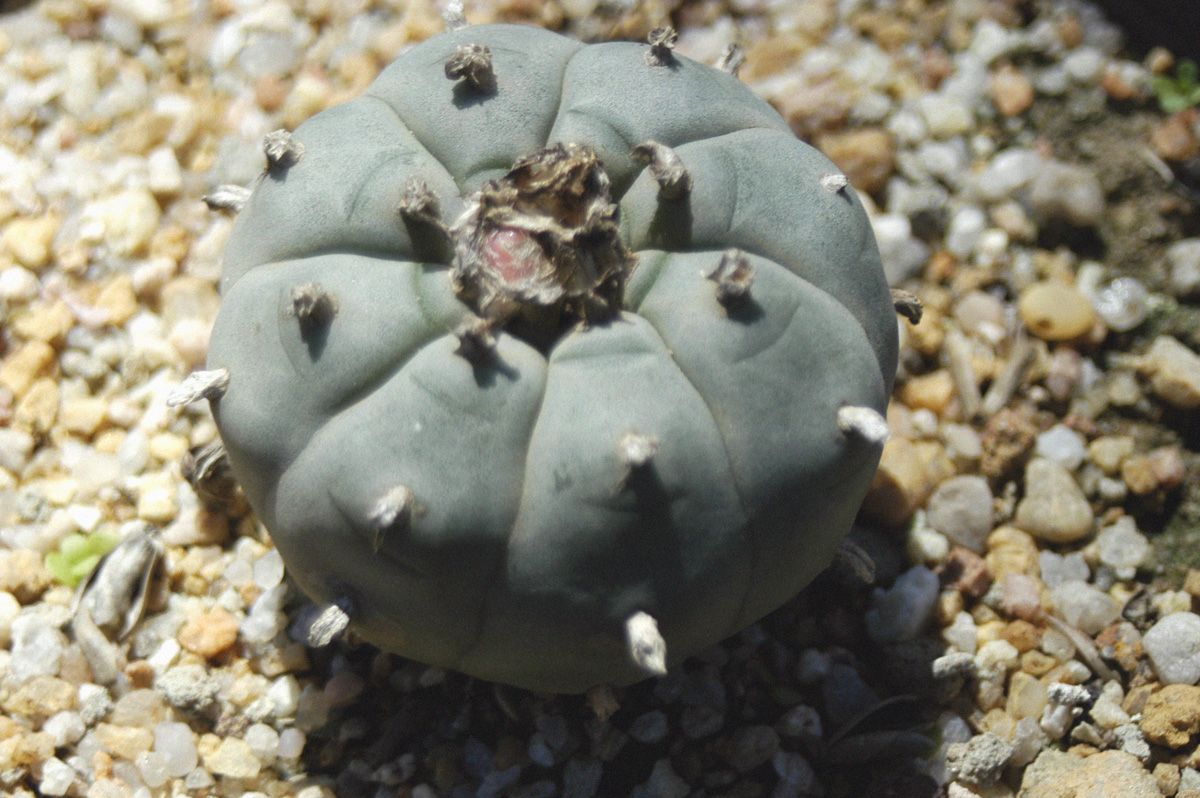
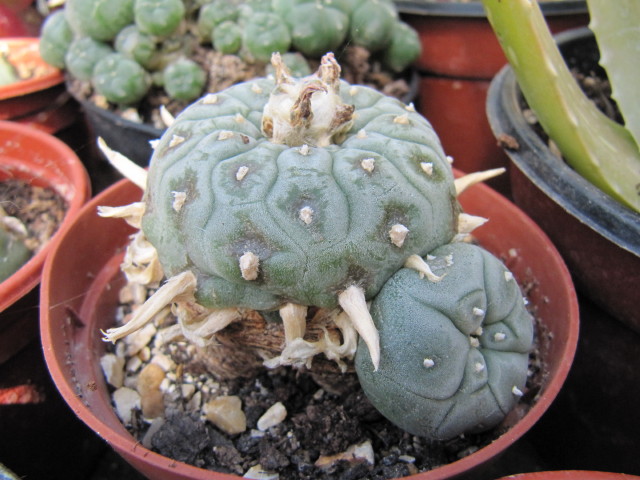
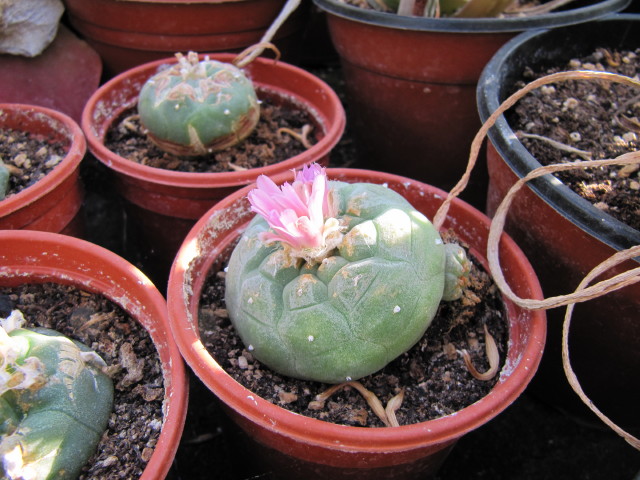
"Decipiens" is an old garden label, most often seen on long-cultivated plants rather than on fresh wild-collected material. On its own the label describes no particular stem colour, rib pattern or flower character beyond what is typical of L. williamsii generally — it marks a lineage in a collection, not a distinct botanical form.
Taxonomy and names
Kew places Lophophora williamsii var. decipiens Croizat, published in 1944, in synonymy under L. williamsii. A later study found that because "decipiens" was named thirty years before L. fricii existed as a published name, most plants historically labelled "L. williamsii var. decipiens" in collections are now believed to actually be L. fricii, a conclusion drawn independently from seed-coat and testa microscopy. That finding does not change Kew's nomenclatural placement of the name itself as a synonym of L. williamsii — it is a fact about how plants were historically mislabelled, not a change to the accepted synonymy. Keep the received "decipiens" label on a plant's record, and add a separately dated determination only when one is actually supported by the specimen.
Cultivation
Grow as for L. williamsii: a gravelly, well-drained mineral mix, bright light, and a dry, frost-free winter. See the soil-mix guide and the seasonal-care calendar.